Why Toilet and Floor Hygiene Matter More Than You Think (And How Most Indian Homes Get It Wrong)
A practical guide to household hygiene in Indian homes — why toilets and floors are the biggest germ hotspots, how often to clean them, and what actually kills bacteria versus what just smells nice.
7/2/20263 min read
We talk a lot about hand hygiene, food hygiene, even air quality — but two of the dirtiest surfaces in any Indian home get surprisingly little attention: the toilet bowl and the floor. Both are touched, walked on, or crawled on every single day, by people, kids, and pets alike. Yet most households clean them on habit rather than science, without really knowing what's working and what isn't.
Why the Toilet Bowl Is a Bigger Health Risk Than People Realize
Every time a toilet is flushed with the lid open, it releases a fine mist of water droplets — carrying bacteria — into the air around it, some of which settles back onto the bowl, the seat, and nearby surfaces. This is a well-documented phenomenon called "toilet plume," and it's one reason bathroom hygiene isn't just about how the toilet looks.
Add to that India's widespread hard water problem — high mineral content that leaves behind limescale and stubborn stains — and you get a surface that can look "clean enough" on the outside while still harbouring bacteria and mineral buildup underneath.
What actually works: cleaners with sufficient acid strength to break down limescale and mineral deposits, used regularly rather than only when stains become visible. A toilet cleaner formulated with 10–12% hydrochloric acid, for instance, is strong enough to cut through hard water marks and kill most household bacteria on contact — a meaningfully different job than a cleaner that only masks odour. Products in this stronger category, like the Mr Glowra Toilet Cleaner, available on Flipkart, are built around hard-water stain removal and daily germ control rather than fragrance alone.
A simple weekly routine:
Apply cleaner directly under the rim and let it sit for 5–10 minutes before scrubbing — most people scrub immediately, which gives the formula no time to break down limescale.
Scrub with a dedicated toilet brush, focusing on the waterline where mineral rings form.
Flush with the lid down to reduce plume spread.
Wipe the seat, lid, and flush handle separately — these are touched more often than the bowl itself and are frequently skipped.
Why Floors Deserve More Thought Than "Mop and Move On"
Floors are a different hygiene problem entirely. They're not just visually dirty — they're where dust, allergens, and, in India's climate, mosquito larvae and other insects tend to collect, especially near doorways, drains, and damp corners.
A few things most people get wrong with floor cleaning:
Over-diluting or under-diluting. Too little cleaner and you're just spreading dirty water around; too much and you leave a sticky residue that actually attracts more dust. Most concentrated cleaners are designed for a specific dilution ratio (commonly 30–50 ml per litre of water) — worth checking rather than eyeballing it.
Ignoring fragrance longevity as a hygiene signal. This sounds counterintuitive, but a fragrance that fades within the hour often means the active cleaning agents have evaporated too — a longer-lasting scent (3–4 hours, for example) can indicate a more stable formulation, not just a nicer smell.
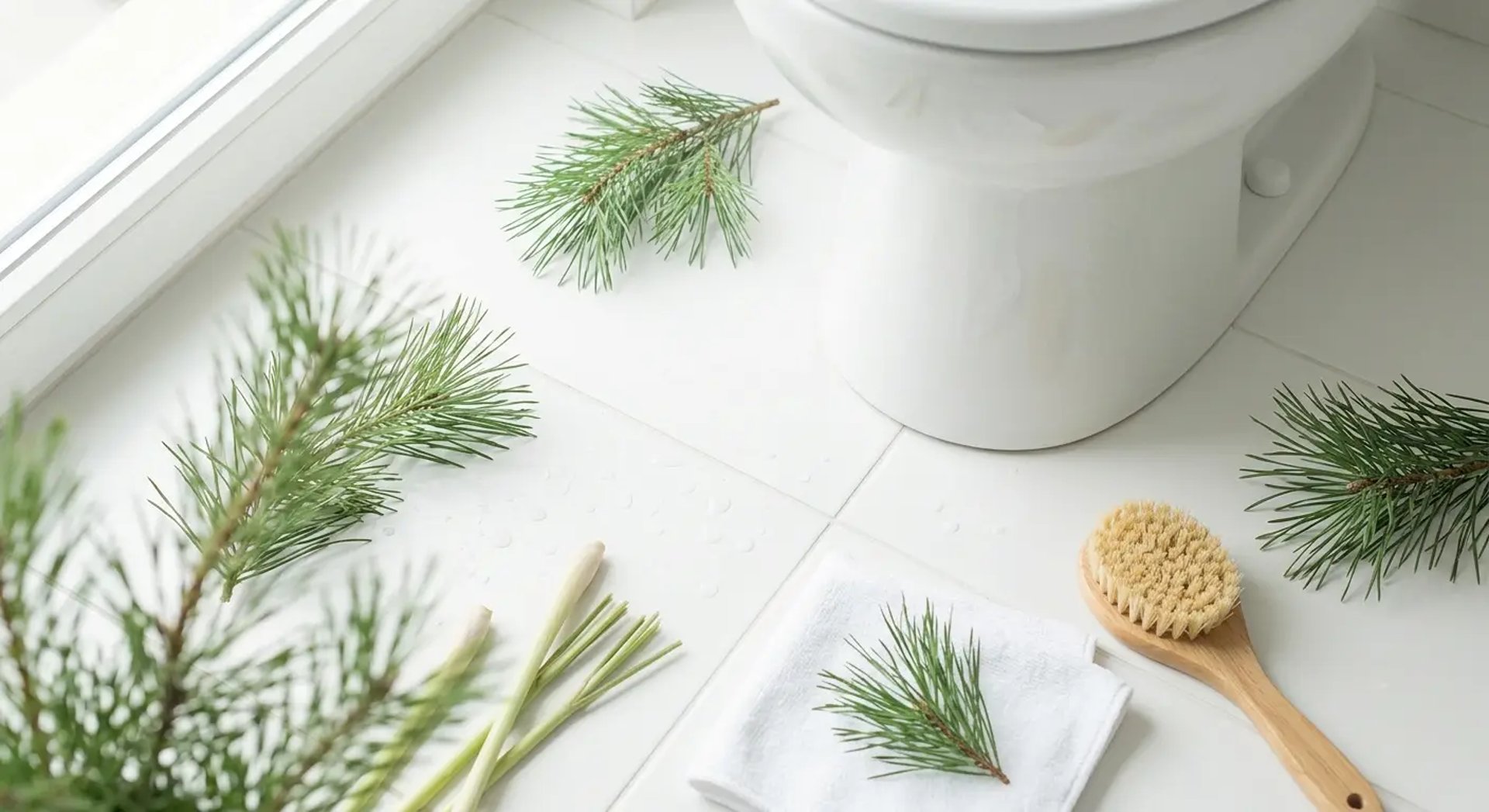
Not accounting for pests. Standing water, damp mopping cloths, and certain floor cleaner bases can actually make floors more attractive to insects, not less. This is where natural essential oils make a genuine functional difference: pine and lemongrass oils are traditionally used specifically because they have insect-repelling properties, in addition to cleaning. Formulations built around these — such as the Mr Glowra Pine & Lemongrass Floor Cleaner — are designed with that dual purpose in mind, rather than fragrance being purely cosmetic.
Is "Natural" Actually Safer for Kids and Pets?
Not automatically — "natural" is an overused marketing word. What actually matters for households with children and pets is:
No harsh chemical residue left on surfaces after the floor dries, since children and pets have far more skin contact with floors than adults do.
Neutral to mild pH, since highly acidic or alkaline residues can irritate paws, skin, and respiratory systems over repeated exposure.
Ventilation-friendly fragrance strength — strong phenyl-based scents are frequently reported to bother pets specifically, more than they bother humans.
If a product doesn't disclose its dilution ratio, pH range, or active ingredients clearly, that's usually a sign to look elsewhere, regardless of how the packaging is marketed.
A Realistic Weekly Hygiene Checklist
Area Frequency What to check Toilet bowl (under rim) 2–3x per week Limescale ring at waterline Toilet seat, lid, flush handle Daily wipe Often skipped entirely Floors (high traffic) Daily to alternate days Correct dilution ratio Floors (damp corners, drains) 2x per week Standing water, insect activity Mopping cloth/mop head Weekly wash Bacterial buildup in fibres
The Bottom Line
Household hygiene isn't about buying the most expensive product on the shelf — it's about understanding why a surface gets dirty and choosing a cleaning approach that actually addresses that cause, whether that's hard water limescale in the toilet or insect activity near your floor drains. Once you know what you're solving for, picking the right product becomes a lot simpler.
If you'd like to compare formulations for yourself, the Mr Glowra Toilet Cleaner is available on Flipkart, and the full pine and lemongrass floor cleaner range can be browsed at mrglowra.com/shop.
© 2025 Mr. Glowra | All rights reserved. Made with love in Uttarakhand, India.