
Best Mop for Cleaning Floors: A Complete Guide to Choosing the Right Cleaning Tool
Best Mop for Cleaning Floors: A Complete Guide to Effective Floor Cleaning
1. Introduction
Selecting the best mop for cleaning floors is essential for maintaining hygiene, preventing damage, and achieving a lasting shine. The wrong mop can leave streaks, trap dirt, or even scratch surfaces, while the right one ensures efficient removal of grime and allergens. Research from cleaning organizations like the International Sanitary Supply Association (ISSA) shows that proper mopping reduces bacteria by up to 99% when paired with appropriate techniques and solutions.
Beyond the mop, high-quality floor cleaners play a key role. A gentle, non-corrosive formula, such as Mr Glowra Floor Cleaner—a pine and lemongrass-based liquid—helps protect various floor types while enhancing shine without residue. This guide explores types of mops, compatibility with floor materials, and practical floor cleaning tips to help you make informed choices for your home.
2. Types of Mops
Understanding types of mops is crucial for matching tools to tasks. Each design offers unique mechanisms for dirt removal, water management, and ease of use. Below are detailed explanations with balanced pros and cons, drawn from lab tests by Consumer Reports and user studies.
Flat Mop
Flat mops feature a thin, rectangular pad that lies parallel to the floor, often attached via Velcro or clips. They glide smoothly and are compatible with microfiber or cotton pads.
Pros:
High maneuverability around furniture and edges.
Quick-drying for reduced slip risks.
Versatile for damp or dry use.
Cons:
Pads may fray on textured floors.
Limited scrubbing power for stubborn stains.
Requires pad swaps for multi-room cleaning.
Spin Mop
Spin mops include a bucket with a centrifugal spinner activated by a foot pedal or handle, wringing water out efficiently.
Pros:
Hygienic—no hand contact with dirty water.
Consistent water extraction minimizes streaks.
Simple for beginners.
Cons:
Bulky storage needs.
Mop heads can loosen over time.
Less effective on very uneven surfaces.
Spray Mop
These mops have an integrated spray bottle for dispensing cleaner directly onto floors, paired with absorbent pads.
Pros:
No bucket mess; portable for spot cleans.
Precise solution control prevents over-wetting.
Lightweight design.
Cons:
Small reservoir limits large-area use.
Pads need frequent cleaning.
Not ideal for heavy scrubbing.
Microfiber Mop
Microfiber mops use synthetic strands that attract dust electrostatically, often in flat or swivel heads.
Pros:
Streak-free on glossy floors.
Reusable and machine-washable (up to 500 cycles).
Effective dry for dusting.
Cons:
Reduced performance on oily residues without cleaner.
Attracts lint and hair.
Fibers wear with abrasive surfaces.
Traditional String Mop
String mops have twisted yarn strands attached to a handle, used with a bucket and manual wringing.
Pros:
Excellent absorption for spills.
Strong agitation for grout and stains.
Low cost.
Cons:
Messy hand-wringing.
Slow drying promotes bacteria.
Leaves excess water.
Steam Mop
Steam mops vaporize water through a heated pad, loosening dirt without chemicals.
Pros:
Sanitizes (kills 99.9% germs, per EPA data).
Tackles sticky buildup.
Chemical-free option.
Cons:
Not for unsealed or wooden floors (moisture/heat damage).
Initial warmup delay.
Higher energy use.
Sponge Mop
Sponge mops use a compressible cellulose or synthetic sponge head with a lever for wringing.
Pros:
High water absorption.
Effective wringer reduces drips.
Affordable.
Cons:
Sponges harbor bacteria if not dried.
Uneven wear.
Can scratch delicate floors.
3. Best Mop for Each Floor Type
Floor compatibility is key to longevity. Here's a research-based breakdown, noting how a gentle cleaner like Mr Glowra Floor Cleaner supports protection by avoiding corrosion.
Tile Floors: Spin, spray, or steam mops handle grout lines well. Their water management prevents slippage; pair with a balanced cleaner for shine.
Marble Floors: Microfiber or flat mops are ideal—gentle and residue-free. Best mop for marble floors avoids steam (etches stone); use non-acidic solutions like Mr Glowra to preserve polish.
Wooden Floors: Microfiber mops (damp only) or flat mops prevent warping. Best mop for hardwood floors limits moisture; gentle cleaners maintain seals.
Vinyl Floors: Spray, flat, or steam mops excel on durable vinyl. Quick-dry pads shine without damage.
Laminate Floors: Microfiber or spray mops minimize water exposure. Avoid saturation to prevent swelling.
Granite Floors: Microfiber flat mops or spin mops suit sealed granite. Skip steam (thermal shock); pH-neutral cleaners like Mr Glowra protect finishes.
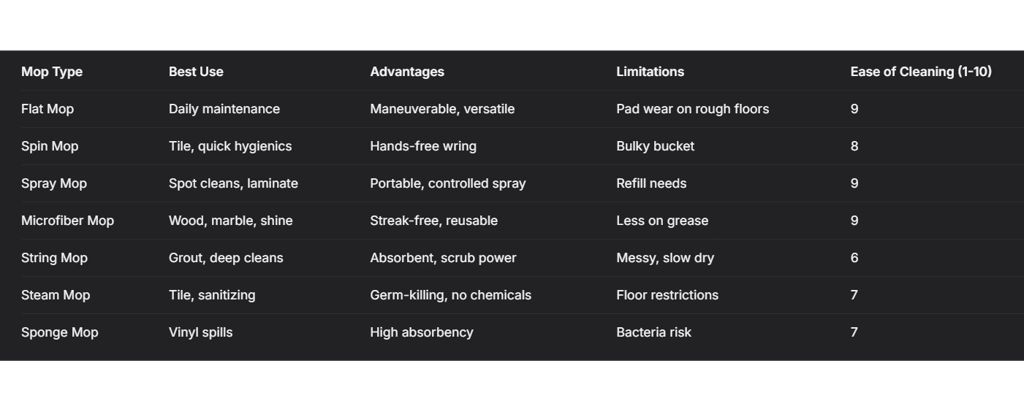
4. Mop Comparison Table
This mop comparison table highlights key attributes based on efficiency studies.
5. How to Choose the Right Mop
How to choose a mop involves these factors:
Floor Material: Match to avoid damage (e.g., microfiber for wood).
Home Size: Absorbent heads for large areas; spray for small spaces.
Cleaning Frequency: Daily? Quick spray/microfiber. Weekly deep? Steam/string.
Drying Time: Fast-dry for traffic areas (microfiber: 5-10 min).
Budget: $10-30 for basics; $50+ for steam. Prioritize durability per reviews.
6. Expert Cleaning Tips
Use microfiber cloths post-mop for buffing shine.
Avoid overwetting wooden floors—damp mops only (under 10% moisture, per wood care standards).
Opt for balanced cleaning liquids like Mr Glowra for safe, effective results.
Maintain mop heads: Rinse post-use, inspect weekly.
Vacuum first to lift debris.
7. Hygiene & Maintenance
Wash Heads: Weekly in hot water (kills 99% bacteria, CDC data); air-dry fully.
Disinfect Handles: Wipe with diluted vinegar monthly.
Storage: Upright in dry areas; avoid damp closets.
Replace Refills: 3-6 months or when frayed—extends life, cuts costs.
8. Eco-Friendly Cleaning Tips
Reusable microfiber reduces waste (lasts 500 washes).
Steam or vinegar-water (1:10 ratio) minimizes chemicals.
Compost natural string mops; recycle plastics.
Low-water mops save 20-30% H2O per session.
9. Common Floor-Cleaning Mistakes
Over-wetting sealed floors (warps laminate/wood).
Harsh chemicals (etches marble/granite).
Wrong mop (string on hardwood scratches).
Skipping pre-vacuum (grinds dirt in).
Dirty mop water reuse (spreads bacteria).
Mopping uncleaned heads (recontaminates).
10. FAQs
What mop is best for wooden floors?
Microfiber mops with minimal dampness prevent moisture damage.
How often should I replace my mop head?
Every 3-6 months for regular use, or sooner if worn.
Can I use any floor cleaner with a spin mop?
No—choose pH-neutral formulas compatible with your floors.
Is a steam mop safe for tile floors?
Yes, for sealed tiles; test grout first.
What's the best mop for marble floors?
Microfiber flat mops for gentle, streak-free cleaning.
Do spray mops work on large homes?
Suitable for medium areas; refill for bigger spaces.
How do I clean a microfiber mop head?
Machine-wash in hot water, air-dry.
11. Conclusion
The best mop for cleaning floors depends on your floors and needs: microfiber for wood/marble, steam for tile, spray for vinyl/laminate. This home cleaning guide equips you with a mop comparison and tips for optimal results. Pairing with a safe cleaner like Mr Glowra Floor Cleaner supports hygiene and surface protection. Implement these strategies for cleaner, longer-lasting floors.
© 2025 Mr. Glowra | All rights reserved. Made with love in Uttarakhand, India.